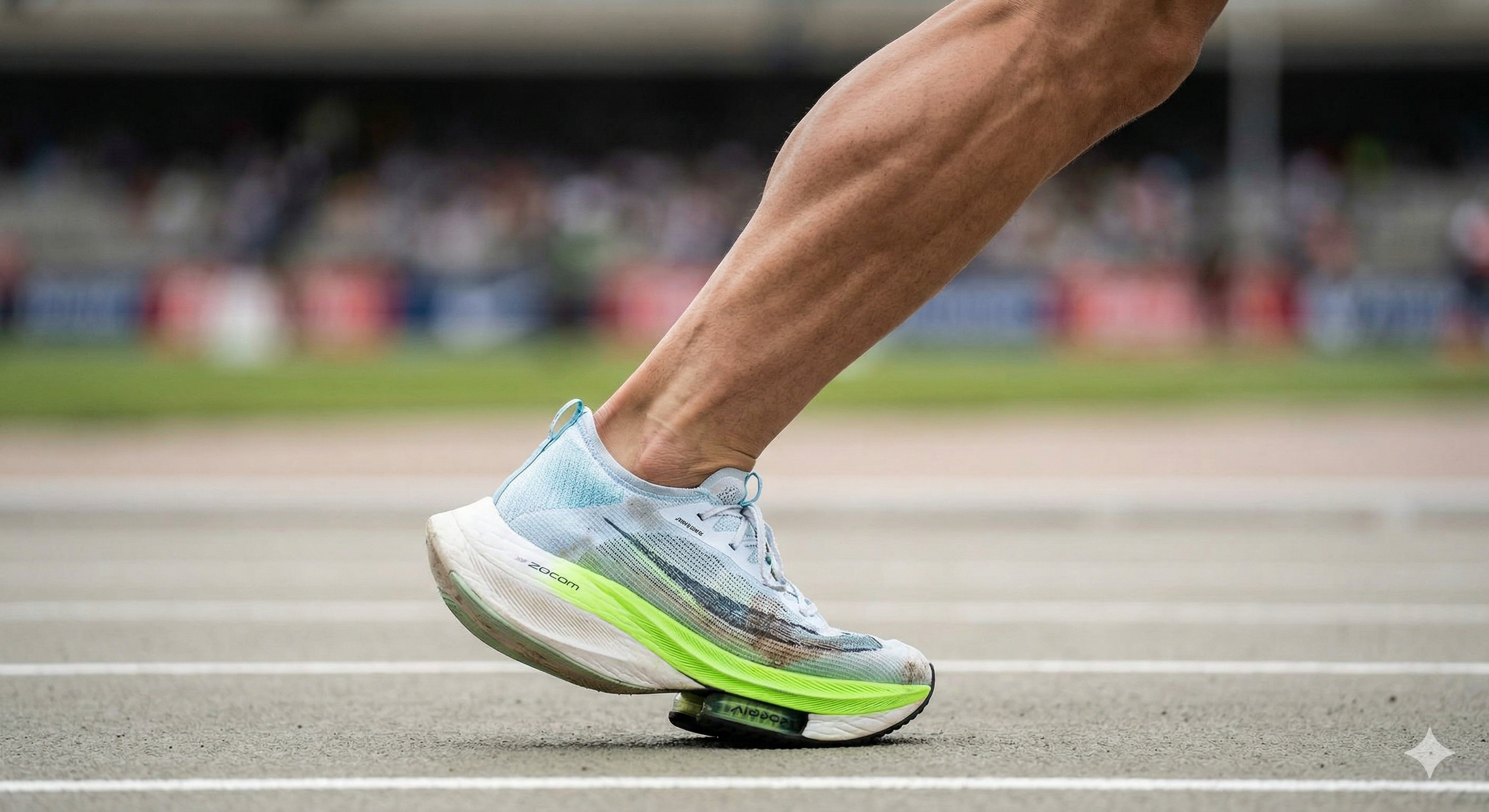
The Carbon Conundrum: Are We Celebrating Runners, Or Their Shoes?
As world records shatter with alarming regularity, it’s time for a frank discussion: Is this an era of unparalleled human potential or merely a triumph of material science?
Another weekend, another record bites the dust. This time, it was Agnes Ngetich’s stunning 28:46 for 10K, obliterating the previous women’s world record and leaving us all gasping. While Ngetich’s incredible talent and training are beyond question, a whisper inevitably follows such performances: "How much did the shoes help?"
Here at Runner's Gazette, we’ve championed innovation. We marvelled at Eliud Kipchoge’s sub-two-hour marathon in Vienna, a feat once deemed impossible, and celebrated the waves of new world records that have redefined what's achievable in everything from the 5,000 meters to the marathon. The data is undeniable: since the advent of carbon-plated super shoes around 2017, average finish times in major marathons like Boston and London have plummeted, and professional athletes are consistently shaving seconds – even minutes – off their personal bests. We've seen performance gains cited between 2-4%, a staggering figure in a sport measured in milliseconds and inches.
But as we stand in March 2026, the initial awe has slowly morphed into a complex conundrum. Are we truly witnessing an explosion of human potential, or merely an arms race among shoe manufacturers? Every major race, from the Olympic trials to your local half-marathon, is a showcase of these technological marvels. Nike's Vaporfly and Alphafly, Adidas's Adios Pro, Saucony's Endorphin Elite, Hoka's Rocket X – each brand vying for dominance, promising unparalleled efficiency and propulsion. If you're not in a super shoe, you're not just behind, you're arguably competing with one hand tied behind your back.
This isn't just an elite problem. The trickle-down effect is profound. Every recreational runner, inspired by tales of faster PBs and reduced muscle fatigue, is now contemplating dropping £200-£250 (or $250-$300 USD/CAD/AUD) on the latest carbon-plated wonder. While it's democratised speed for many, allowing amateur runners to hit paces they once only dreamed of, it also creates an economic barrier. Is the joy of running becoming increasingly tied to what's on your feet, rather than the raw effort of your lungs and legs?
The philosophical question looms largest: how do we compare eras? Is David Rudisha’s astonishing 1:40.91 800m world record from 2012, run in relatively traditional spikes, somehow less impressive because it was set before the carbon revolution? Does Paula Radcliffe's 2:15:25 marathon from 2003, a record that stood for over two decades, lose its lustre when contemporary women are routinely breaking 2:17 or faster in highly cushioned, propulsive footwear? These are not questions aimed at diminishing current athletes; their dedication and talent are immense. Rather, they're about the integrity of the historical narrative.
The image chosen for this article, a close-up of a gleaming, impossibly thick-soled super shoe, perfectly encapsulates this tension. It's beautiful, innovative, and undeniably powerful. But it also begs the question: how much of the performance is the athlete, and how much is the engineering marvel strapped to their foot?
The governing bodies, like World Athletics, have attempted regulation, setting stack height limits and ensuring general availability. Yet, the innovation continues at a breakneck pace, with manufacturers constantly pushing the boundaries within the rules. We are in an era where shoe development is as critical to performance as any training block or nutritional plan.
So, where does this leave us, the running community? We celebrate the human spirit and the relentless pursuit of excellence. We cheer every sub-2:10 marathon, every 4-minute mile. But we must do so with open eyes, acknowledging that the landscape of elite running has been irrevocably altered. The age of "super shoes" has given us unparalleled speed and excitement, but it has also forced us to grapple with a new definition of "human potential." Perhaps it's time for a mental asterisk on these new records – not to diminish the runners, but to fully appreciate the complex interplay of athlete, science, and the ever-evolving boundaries of our beloved sport.